
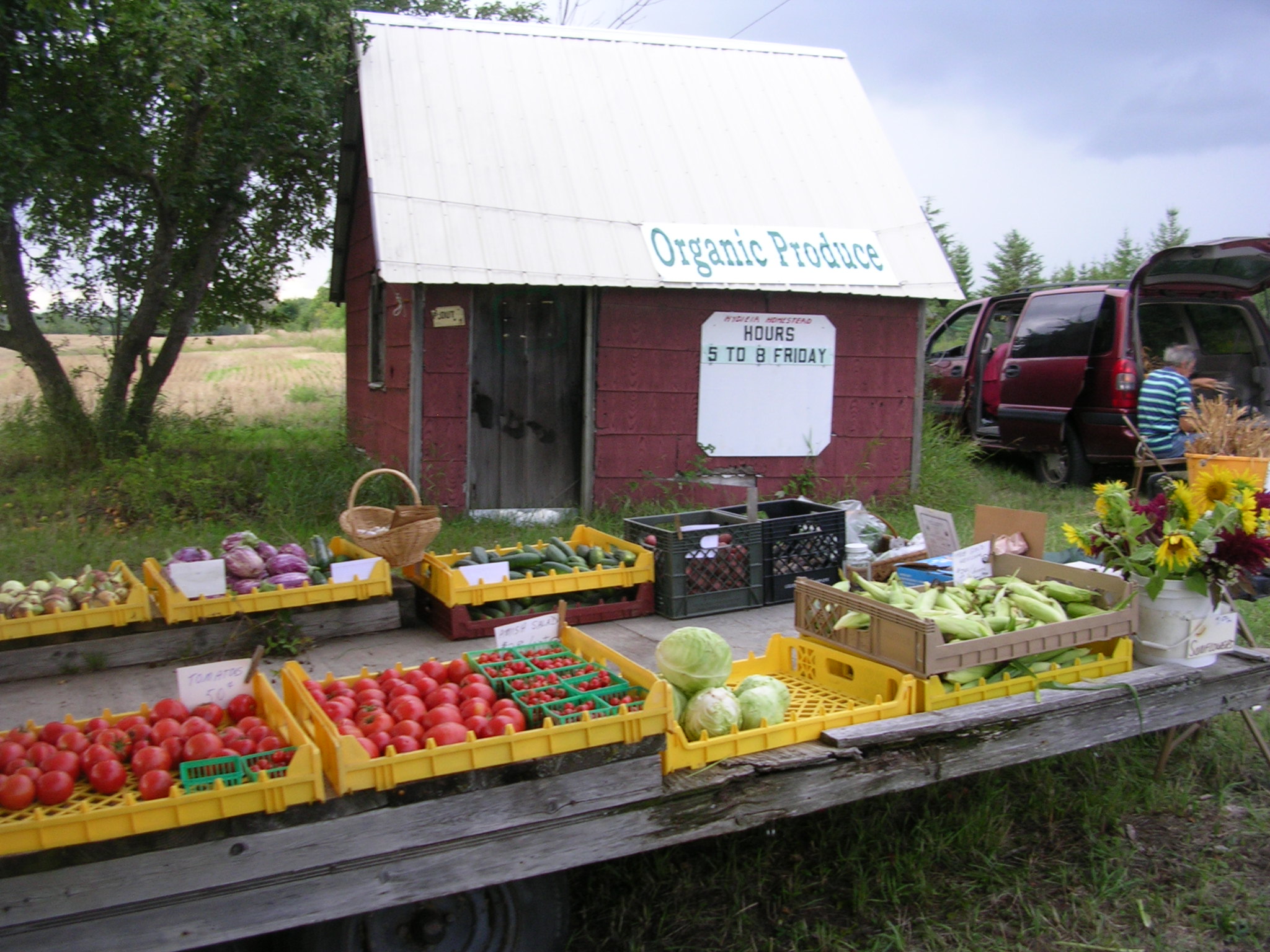
Tucked quietly into the landscape of Arenac County, a narrow tree line opens to reveal something unexpected. Beyond it lies Hygieia Homestead, a 55-acre working farm shaped not by convenience or convention, but by intention. Orchards dot the property with walnuts, apples,
and other fruit trees, while rows of garlic, onions, beans, and potatoes emerge with the seasons. Hay fields move with the wind, and between them, small wetlands, pockets of mature mixed forest, and a diverse patchwork of grasses create a living mosaic. It is, in many ways, a quiet outlier, the only farm in the surrounding area managed entirely without chemicals, a place where the soil is not asked to produce more, but to endure, to regenerate, and to remain whole.

For Janet Allen and Mark Gillen, that difference was always the point. Their journey to this place began decades ago with a shared desire not only to live differently, but to live more deliberately.
When they found this land in 2006, it had most recently been used for conventional row crops. Before the ink was even dry on the purchase agreement, they had already begun planting. “We had a garden in the ground before we even signed the papers,” Janet recalled, a detail that
speaks to the urgency and conviction they carried into this place. What followed was years of steady transformation as fields once treated with chemicals were restored, orchards were planted, and perennial crops took root. Over time, nearly the entire property came into some
form of production, not as a monoculture, but as a diverse and interwoven system that reflects both ecological function and human care.
They farm organically and veganically, without the use of synthetic chemicals or animal-based inputs, and with a clear awareness that the health of the soil shapes everything that follows. Their approach is grounded in observation and relationship as much as it is in practice. “We live by the weather,” they shared, describing a life attuned to sunrise and sunset, to birds returning in spring, and to the quiet rhythms of the land itself. This way of living has deepened their sense of responsibility, not only to the land, but to all the life it supports and to the generations who will come after them.

From the beginning, Hygieia Homestead was meant to be more than a farm. Janet and Mark imagined a place where multiple families could live and work together, growing food, sharing responsibility, and building a small, resilient community rooted in the land. They designed the
property with that future in mind and spent years trying to bring that vision to life. Dozens of people came, some staying briefly, others leaving almost as soon as they arrived. Each time there was hope, followed by the realization that it would not work. They describe it as a long and
often emotional process, one that felt at times like a rejection of something they deeply believed in. Over time, the cycle of anticipation and disappointment became exhausting, and they found themselves needing to let go of that original vision.
In releasing that idea, something else began to take shape. The question shifted from how to build a shared community to how to ensure the land itself would be protected. Their children did not want the property, and the surrounding landscape is largely dominated by conventional
agriculture. Without a plan, it was easy to imagine the land returning to chemical use, its diversity simplified and its character lost. That possibility weighed heavily on them, particularly given the years they had spent restoring and caring for it.
Their search for a long-term solution led them to HeadWaters Land Conservancy. Through a conservation easement and a carefully considered estate plan, Janet and Mark have ensured that their property will remain protected and cared for well beyond their lifetimes. Using a Lady Bird deed, they have arranged for the property to pass directly to HeadWaters, allowing them to retain full ownership and control during their lives while securing its future as protected land. For them, this decision brought a deep sense of peace. “This little postage stamp part of the earth, we did the right thing,” Janet said, reflecting on the years of work and the weight of responsibility she feels toward the life that depends on this place.
For HeadWaters, the significance of that trust is not taken lightly. “To be entrusted not only with the protection of this land, but with its future beyond a lifetime, is something we hold with a deep sense of responsibility,” said Executive Director Julie Rubsam. “Janet and Mark have created something incredibly thoughtful here, and we see ourselves as caretakers of that vision as much as the land itself.”

When they look ahead, Janet and Mark do not see an endpoint, but a continuation. They imagine a place where people can walk the land, observe its rhythms, and perhaps even participate in its care. They hope it remains productive, thoughtful, and open, a place that offers something different within the surrounding landscape. Mark describes it as an oasis, somewhere people can come to experience a different relationship with the land and to understand what it means to care for even a small piece of the earth with intention.
Hygieia Homestead reflects a way of thinking that moves beyond ownership toward stewardship and, ultimately, toward legacy. The choices Janet and Mark have made ensure that this land,
shaped by years of intention and care, will continue to offer something meaningful to those who encounter it in the future. For those interested in experiencing this working farm firsthand, HeadWaters Land Conservancy will offer opportunities to tour the property and learn more about its approach to land stewardship. To express interest in a future tour, please contact HeadWaters Land Conservancy.


Wonderful, would love to tour at some time.