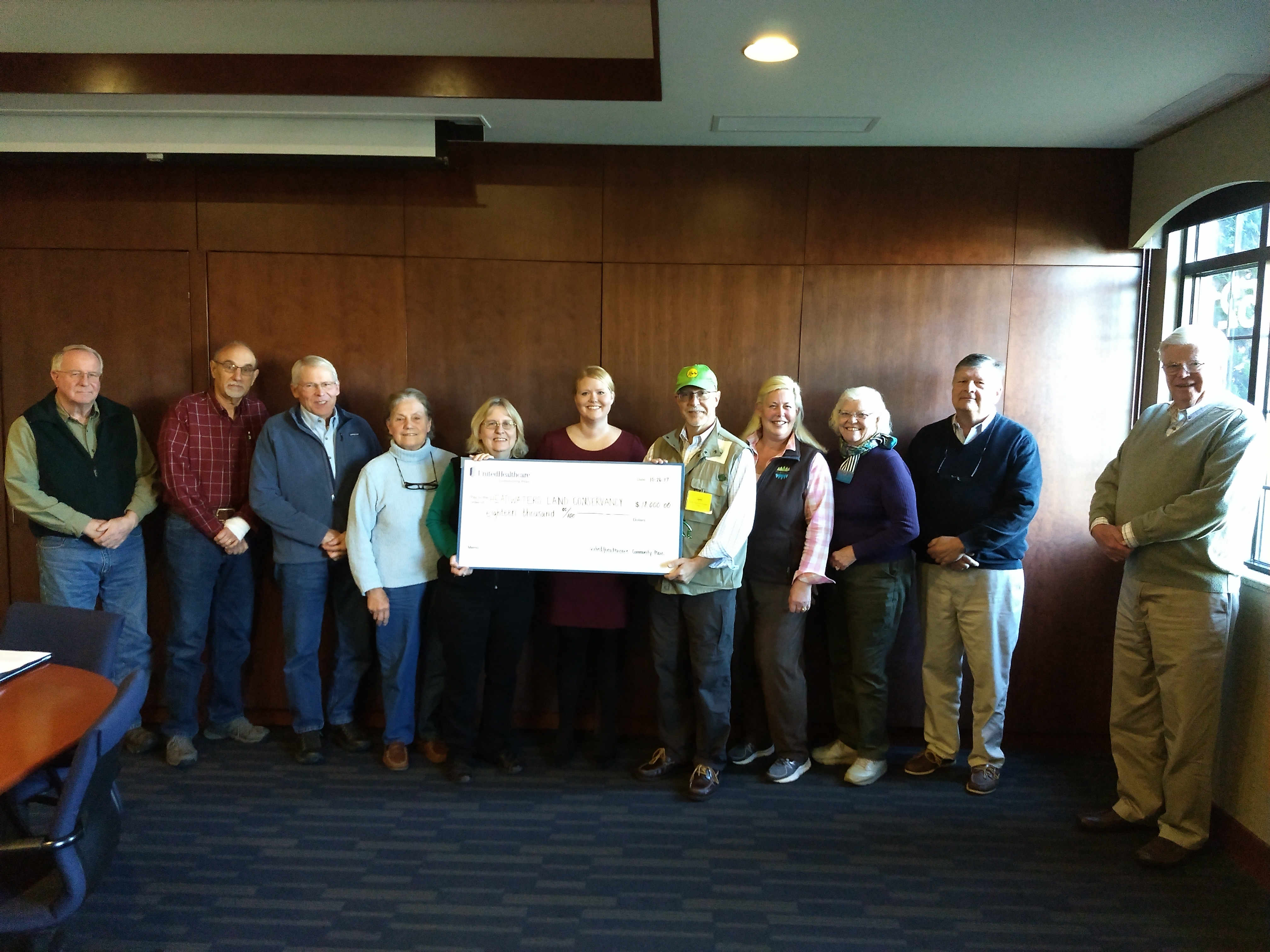
The Thunder Bay Audubon Society (TBAS) has officially transferred ownership of the Fletcher Pond bottomlands to HeadWaters Land Conservancy (HWLC). This historic transfer marks a significant milestone in the ongoing conservation of this valuable wetland area, ensuring its protection for future generations.
Spanning almost 7,000 acres across Alpena and Montmorency counties, Fletcher Pond provides vital habitat for migratory birds and wildlife. With this donation, TBAS entrusts HWLC to continue the legacy of stewardship they began more than four decades ago.
“This donation represents a remarkable act of conservation leadership,” said Julie Rubsam, Executive Director of HeadWaters Land Conservancy. “Thunder Bay Audubon Society’s decades-long ownership of Fletcher Pond has ensured that it remains a haven for wildlife and a treasured natural resource. We are honored to carry that legacy forward.”
A Legacy of Conservation
Since acquiring the bottomlands in the early 1980s, TBAS has been a dedicated steward of the property, recognizing its ecological significance and acting to preserve it during a time when few local organizations were equipped to do so.
“Over the past year and a half, Thunder Bay Audubon Society has had several discussions about the future of our Fletcher Pond property,” said Karen Tetzlaff, President of TBAS. “As our membership has aged and become less active, we wanted to ensure that this property — and the wildlife it supports — would continue to be cared for. We are grateful to HeadWaters Land Conservancy for stepping in to continue the work we started.”
Continuing the Osprey Project
A key conservation feature at Fletcher Pond is its importance to Michigan’s osprey population. TBAS has long supported the installation and maintenance of nesting platforms, helping to ensure that these majestic raptors have safe places to nest and raise their young. This commitment will continue under HWLC’s ownership, with TBAS remaining actively involved in monitoring and maintaining the platforms.
“Although TBAS no longer owns the property, we are proud to continue working to support the osprey project,” said Tetzlaff. “Ensuring these birds have a secure home at Fletcher Pond is a priority we all share.”
“We are excited to collaborate with TBAS to ensure that both the habitat and the species that depend on it continue to thrive,” added Rubsam. “This partnership reflects the power of local organizations working together to protect Michigan’s natural heritage.”


Looking Forward
With the bottomlands now protected by HWLC, Fletcher Pond will continue to serve as a vital ecological resource and a destination where people can connect with nature. In addition to maintaining and restoring critical habitats, HWLC will explore opportunities for educational programming and community engagement to foster appreciation for this unique landscape.
Bottomlands are the submerged lands beneath a body of water, extending from the shoreline to the ordinary high-water mark. This means they are the land underneath lakes, rivers, or ponds, rather than the water itself. Ownership and management of bottomlands can be complex, as they often fall under a mix of private and public jurisdiction, depending on state laws, historical land grants, and conservation agreements.
In many cases, bottomlands are owned by the adjacent upland property owners, meaning those who own land directly next to the water also hold rights to the submerged lands extending from their property into the waterbody. These rights can be subject to restrictions, particularly when it comes to activities that impact water quality, habitat, or public access.
However, there are exceptions. In the case of Fletcher Pond, the bottomlands were not solely owned by adjacent property owners but instead the majority belonged to the Thunder Bay Audubon Society. This means that while the water in the pond is a shared resource, the physical lakebed itself was under the society’s ownership. The significance of acquiring bottomlands, as in this case, is that it allows for greater control over conservation efforts, habitat restoration, and the management of ecological resources.
Owning bottomlands can be particularly important for environmental protection, as these areas often contain critical habitats for fish, aquatic plants, and other wildlife. Additionally, controlling bottomlands can influence the use and management of the waterbody above, ensuring it is preserved for ecological and public benefits rather than being subject to degradation from private development or intensive use.
“This is exactly the kind of lasting impact that conservation partnerships can achieve,” said Rubsam. “We are deeply grateful to Thunder Bay Audubon Society for entrusting us with this special place, and we look forward to ensuring its protection for generations to come.”